

CERTIFIED PHLEBOTOMY TECHNICIAN
Our Offers

Send Enquiry
Enroll Now
Phlebotomy Course in Abu Dhabi | Phlebotomy Technician Training
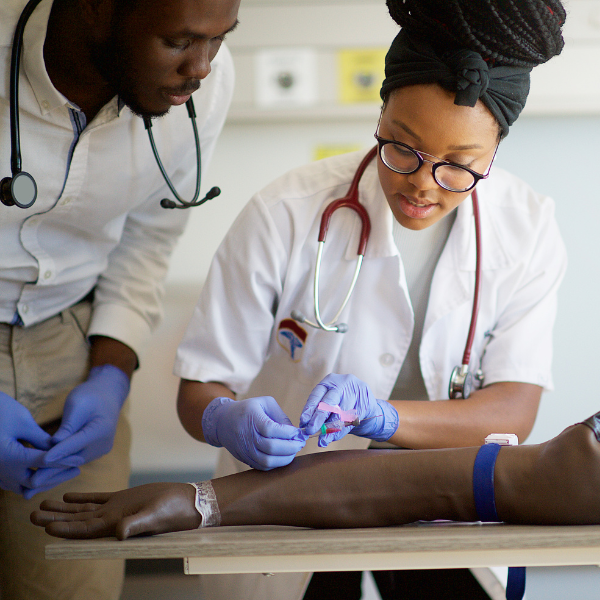
Looking to build practical healthcare skills in blood collection and specimen handling? Our phlebotomy course in Abu Dhabi is designed to help aspiring phlebotomists and healthcare professionals develop essential knowledge and practical skills in venipuncture, blood sample collection, patient safety, infection control, and specimen handling.
The programme combines theoretical learning with practical, skills-focused training to help learners understand the responsibilities of a phlebotomy technician and prepare for relevant healthcare environments.
Ready to develop professional phlebotomy skills? Enquire about the next available course batch today.
Phlebotomy Course in Abu Dhabi: Quick Overview
| Course Detail | Information |
|---|---|
| Course | Phlebotomy Technician Training |
| Location | Abu Dhabi |
| Course Fee | AED 2,799 |
| Duration | Approximately 2–4 months, depending on the selected schedule |
| Training | Theory and practical training |
| Assessment | Online assessment |
| Certification | Certificate and ID card, with AMCA accreditation stated by the institute |
| Suitable For | Aspiring phlebotomists and healthcare professionals |
| Class Options | Weekday, evening and weekend schedules |
| Certificate Format | PDF certificate; hardcopy option available at an additional cost |
Course information, fees and schedules may be subject to change. Confirm the latest details with the admissions team before enrolment.
What Is a Phlebotomy Course?
A phlebotomy course teaches learners how to safely collect blood specimens for laboratory testing while following appropriate patient-care, infection-control and specimen-handling procedures.
Phlebotomy training typically introduces learners to venipuncture, capillary blood collection, blood collection equipment, patient identification, specimen labelling, infection prevention and professional safety practices.
The course can be particularly useful for people planning to develop skills as a phlebotomist or phlebotomy technician, as well as healthcare professionals who want to strengthen their blood collection knowledge.
What Will You Learn in Our Phlebotomy Course?
The programme focuses on the knowledge and practical skills needed to perform blood collection procedures safely and professionally.
Venipuncture and Blood Collection
Venipuncture is the process of accessing a vein to collect blood for diagnostic testing. Learners can develop an understanding of vein selection, patient preparation, collection techniques, and safe needle removal.
Training should also help learners understand how to minimise common problems associated with blood collection, including patient discomfort, bruising and specimen contamination.
Capillary Blood Collection
Capillary blood collection involves obtaining a small blood sample, commonly from a fingertip. Understanding when capillary collection is appropriate gives learners broader knowledge of specimen collection techniques.
Blood Collection Equipment
Learners become familiar with the purpose and appropriate use of common phlebotomy equipment, including:
- Needles
- Syringes
- Tourniquets
- Evacuated tube systems
- Blood collection tubes
- Vacutainers
- Personal protective equipment
- Sharps containers
Understanding equipment selection and safe handling is an important part of effective blood specimen collection.
Order of Draw
The order of draw refers to the recommended sequence used when collecting blood into different types of collection tubes.
Understanding this sequence helps reduce the possibility of additive carryover and supports specimen quality during laboratory testing.
Specimen Handling and Labelling
Correct specimen identification and handling are essential parts of phlebotomy.
Learners should understand the importance of:
- Correct patient identification
- Proper specimen labelling
- Appropriate collection tubes
- Specimen integrity
- Safe specimen storage
- Specimen transportation
- Preventing contamination
- Avoiding pre-analytical errors
These procedures help ensure that collected samples are suitable for laboratory analysis.
Infection Control and Phlebotomy Safety
Infection prevention is a fundamental part of healthcare practice.
The training covers concepts related to:
- Hand hygiene
- Personal protective equipment
- Aseptic practices
- Sharps safety
- Needlestick injury prevention
- Safe disposal of contaminated materials
- Prevention of cross-contamination
Patient Care and Communication in Phlebotomy
Phlebotomy is not only about collecting blood. Effective patient interaction is also an important part of the process.
Learners should develop an understanding of how to:
- Identify patients correctly
- Explain the procedure clearly
- Maintain patient privacy and dignity
- Help patients feel comfortable
- Communicate professionally
- Recognise potential reactions such as dizziness or fainting
- Follow appropriate safety procedures
Strong communication skills can be especially valuable when working with anxious patients, children, older adults, or individuals who may have concerns about needles.
Phlebotomy Course Curriculum
A comprehensive phlebotomy curriculum should connect theoretical knowledge with practical blood collection procedures.
| Module | Key Learning Areas |
|---|---|
| Introduction to Phlebotomy | Role, responsibilities, and scope of phlebotomy |
| Anatomy and Physiology | Veins, blood and relevant body systems |
| Medical Terminology | Essential healthcare terminology |
| Patient Identification | Correct identification and preparation |
| Venipuncture | Blood collection techniques |
| Capillary Collection | Finger-stick blood collection |
| Equipment | Needles, tubes, syringes and collection devices |
| Order of Draw | Correct collection tube sequence |
| Specimen Handling | Labelling, handling and transportation |
| Infection Control | Hygiene, PPE and contamination prevention |
| Patient Care | Communication, comfort and safety |
| Difficult Blood Draws | Understanding challenging venous access |
| Sharps Safety | Needle handling and disposal |
| Quality Control | Specimen integrity and error prevention |
Learners who want to explore other professional healthcare options can also browse our healthcare training programs in Abu Dhabi.
Who Can Enrol in a Phlebotomy Course?
The programme is suitable for aspiring phlebotomists and healthcare professionals who want to develop blood collection skills.
It may be relevant to:
- Aspiring phlebotomists
- Phlebotomy technician candidates
- Certified Nursing Assistants
- Healthcare assistants
- Nursing professionals
- Clinical support staff
- Individuals with relevant medical experience
Prior knowledge of medical terminology, anatomy, and physiology is required according to the current admission criteria.
Previous healthcare experience, including experience as a Certified Nursing Assistant, is recommended.
If you are exploring entry-level healthcare education, a CNA training center can also be a useful starting point for developing foundational patient-care skills.
Phlebotomy Course Duration and Class Schedule
The course duration depends on the selected class schedule, with available options ranging from approximately two to four months.
Current schedules include:
| Schedule | Approximate Duration |
|---|---|
| Friday, 10:00 AM–4:00 PM | 2.5 months |
| Tuesday, 6:30 PM–9:30 PM | 4 months |
| Thursday, 6:30 PM–9:30 PM | 4 months |
| Friday, 6:30 PM–9:30 PM | 4 months |
| Saturday & Sunday, 6:30 PM–9:30 PM | 2 months |
The availability of specific batches can change, so prospective learners should confirm the latest schedule before registering.
Need a schedule that fits around work or other commitments? Ask our admissions team about the next available batch.
Phlebotomy Course Fees in Abu Dhabi
The listed fee for the Onyx Phlebotomy Course is AED 2,799.
Course fees can depend on the programme, schedule, certification options, and other inclusions. The current course information also states that learners can receive a free PDF certificate, while a hardcopy certificate is available as a paid option.
Before enrolment, confirm:
- Current course fee
- Payment options
- Certificate charges
- Course materials
- Practical training inclusions
- Assessment details
- Upcoming batch availability
Check your eligibility and confirm the latest course fee with our admissions team.
What Is Included in the Phlebotomy Course?
The course provides training designed around theoretical knowledge, practical skills, and assessment.
Depending on the current course package, learners should confirm the availability of:
- Phlebotomy theory
- Practical training
- Venipuncture training
- Blood collection knowledge
- Infection-control training
- Assessment
- Course certificate
- ID card
- PDF certificate
- Optional hardcopy certificate
For complete details about what is included in your selected batch, contact the institute before registration.
Why Choose Our Phlebotomy Course in Abu Dhabi?
Practical, Skills-Focused Training
Phlebotomy requires more than theoretical knowledge. The programme emphasises practical, hands-on learning to help learners understand blood collection procedures and essential safety practices.
Flexible Training Schedules
Multiple weekday, evening and weekend options make the programme potentially suitable for learners balancing education, employment or other responsibilities.
Healthcare-Focused Learning
The programme focuses on relevant healthcare concepts such as venipuncture, anatomy and physiology, medical terminology, patient safety, infection control and specimen handling.
Certification
According to the current course information, successful learners receive a certificate and ID card, with AMCA accreditation stated by the institute.
Learners should confirm the exact certification and accreditation terms applicable to their chosen programme.
Is the Phlebotomy Certificate Recognised?
A course certificate and a professional healthcare licence are not necessarily the same thing.
The Onyx course information states that learners receive a certificate and ID card accredited by AMCA. However, anyone planning to work in a regulated healthcare role in Abu Dhabi should separately verify the current requirements of the relevant healthcare regulator and prospective employer.
This distinction is important because completing an educational course does not automatically guarantee employment or professional licensing.
For accurate information about current eligibility, certification, and employment requirements, learners should verify the applicable UAE regulations before enrolling.
Can You Work as a Phlebotomist in Abu Dhabi After Certification?
Completing phlebotomy training can provide relevant knowledge and skills, but course completion does not by itself guarantee employment or professional licensing.
Career eligibility can depend on factors such as:
- Educational qualifications
- Professional experience
- Certification
- Employer requirements
- Applicable healthcare regulations
- Licensing requirements
- Job role and scope of practice
Before applying for phlebotomy positions, candidates should check the latest requirements applicable to their intended role in Abu Dhabi.
Career Opportunities After Phlebotomy Training
Phlebotomy skills can be relevant to several healthcare environments where blood specimen collection is required.
Potential work environments may include:
- Hospitals
- Medical clinics
- Diagnostic laboratories
- Blood collection centres
- Healthcare facilities
- Outpatient services
- Laboratory support environments
Potential job titles may include:
Phlebotomist
A phlebotomist is a healthcare worker who specialises in collecting blood specimens for testing and other clinical purposes.
Phlebotomy Technician
A phlebotomy technician performs blood collection and related specimen-handling responsibilities according to their role, training, and applicable regulations.
Specimen Collection Technician
Some healthcare and laboratory environments may employ personnel who focus on collecting and managing clinical specimens.
Actual job titles, responsibilities, and licensing requirements vary by employer and jurisdiction.
Phlebotomy Course vs Other Healthcare Training
Choosing the right programme depends on your career goals.
| Programme | Main Focus | Suitable For |
|---|---|---|
| Phlebotomy Training | Blood collection and specimen handling | Aspiring phlebotomists |
| CNA Training | Patient care and nursing assistance | Aspiring nursing assistants |
| Medical Laboratory Training | Laboratory processes and testing | Laboratory-focused careers |
| Healthcare Courses | Different clinical and support specialisations | Learners exploring healthcare careers |
If you are considering other education pathways, explore Onyx's wider healthcare course options before making your decision.
How Does Phlebotomy Training Prepare You for Healthcare Work?
Phlebotomy training helps learners understand the technical, safety, and patient-care principles involved in blood specimen collection.
A well-rounded programme connects:
Anatomy - Patient preparation - Venipuncture - Blood collection - Specimen labelling - Handling - Safety - Laboratory testing
This workflow helps learners understand why each stage of blood collection matters and how errors during collection or handling can affect specimen quality.
Assessment and Certification
Assessment is delivered through the institute's online platform, and the current course information states that learners receive their assessment results immediately after completion.
Successful learners receive the stated course certification and ID card.
Before enrolling, prospective students should confirm:
- Assessment format
- Passing requirements
- Retake policy
- Certificate eligibility
- Certificate delivery
- Hardcopy certificate charges
- Accreditation details
This ensures that learners understand exactly what they will receive after completing the programme.
Frequently Asked Questions
What is a phlebotomy course?
A phlebotomy course teaches learners how to collect blood specimens safely while covering venipuncture, patient care, infection control, and specimen handling.
What does a phlebotomist do?
A phlebotomist collects blood samples, identifies patients, prepares collection equipment, labels specimens, and follows appropriate safety and handling procedures.
How long is a phlebotomy course in Abu Dhabi?
The Onyx programme offers schedules lasting approximately two to four months, depending on the selected class timetable.
How much does a phlebotomy course cost in Abu Dhabi?
The currently listed Onyx course fee is AED 2,799. Learners should confirm the latest price and inclusions before enrolment.
Who can join a phlebotomy course?
The programme is designed for aspiring phlebotomists and healthcare professionals, with prior knowledge of medical terminology, anatomy, and physiology required.
Is previous healthcare experience required for phlebotomy training?
Previous healthcare experience is recommended, while prior Certified Nursing Assistant experience can be beneficial according to the stated admission criteria.
Does the phlebotomy course include practical training?
Yes. The programme states that it emphasises practical, hands-on training to help learners develop essential phlebotomy skills.
What topics are covered in phlebotomy training?
Topics can include venipuncture, blood collection, anatomy and physiology, medical terminology, specimen handling, infection control, equipment, patient safety, and order of draw.
What is venipuncture?
Venipuncture is a blood collection technique involving access to a vein, typically to obtain a specimen for laboratory testing.
What is the order of draw in phlebotomy?
The order of draw is the recommended sequence for collecting blood into different tubes to help prevent additive carryover and protect specimen quality.
Will I receive a certificate after completing the course?
Yes. The course information states that successful learners receive a certificate and ID card, with AMCA accreditation stated by the institute.
Is an AMCA certificate the same as a UAE healthcare licence?
No. Educational certification and professional licensing are separate considerations. Candidates should verify current Abu Dhabi healthcare licensing requirements for their intended role.
Can I work as a phlebotomist in Abu Dhabi after completing the course?
Course completion can support relevant knowledge and skills, but employment and professional licensing depend on applicable regulations, qualifications, and individual employer requirements.
Are weekend phlebotomy classes available?
Yes. The current schedule includes Saturday and Sunday evening classes, subject to batch availability.
Are evening phlebotomy classes available?
Yes. The published schedule includes several weekday evening options, allowing learners to choose from different training schedules.
Explore More Healthcare and Professional Training Options
Developing one healthcare skill can be the beginning of a broader professional learning journey. Explore our Blog for additional insights into healthcare education, professional development, and training opportunities.
Learners interested in other professional disciplines can also explore our teacher training course in Abu Dhabi and compare programmes according to their career goals.
Enrol in a Phlebotomy Course in Abu Dhabi
If you are ready to develop practical knowledge in venipuncture, blood collection, specimen handling, and patient safety, the Onyx Phlebotomy Technician Training programme can be an option to consider.
Review the eligibility criteria, course schedule, fee, and certification details before choosing your preferred batch.
Have questions about eligibility, certification, or upcoming batches? Contact us today.
Register Your Interest